

Possibly the most undeserving Palme d’Or winner in history. It completely escapes me what the Cannes jury was even remotely thinking with this film.
Fjord is the latest film from Cristian Mungiu (acclaimed director of previous Palme winner Four Months, Three Weeks, Two Days), returning with a star-studded cast including Sebastian Stan and Renate Reinsve in what may be the worst roles I’ve ever seen either of them in.
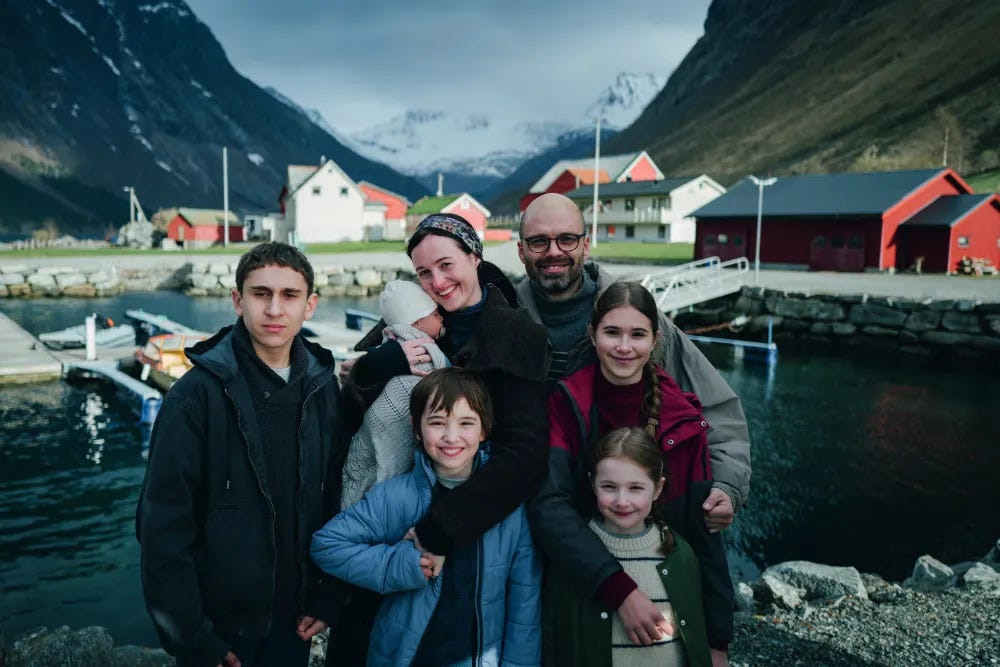
Stan and Reinsve play the patriarch and matriarch of a blended Romanian/Norwegian family, relocating with their five children to Norway to be closer to family.
They don’t quite fit in due to their evangelical Christian lifestyle, which the film uses to pose a relatively interesting question around family, belief, and the role of the state in “protecting” children.
Unfortunately, the film struggles to even ask these questions, let alone provide any insights into the complexities inherent therein. Instead, the film puts forth a shockingly simplistic worldview—where our protagonists do nothing wrong and our various antagonists are comically evil—robbing its criticism of the role of the state of any real bite.
Pacing? Nonexistent. Even with the overly straightforward narrative, none of the emotional impact lands because the film is more interested in advancing the plot (which is a futile effort considering how little happens) than allowing any of us to sit with any of its highly contrived tensions.
In my most generous reading of the film, it attempts to use this conflict between family and government to offer some insight into our post-truth world, where accusations have taken precedence over understanding what is actually real, but the film does not do enough to earn this read.
At its worst, this is right-wing propaganda that serves to reinforce ignorant beliefs through some of the most uncomplicated characters I’ve seen in a film this year. Nobody appears more than one-dimensional, relying more on offensive stereotypes than any sort of complex character development.
This could maybe be forgiven if the film spent its runtime really showing the impact of the conflict on the entire family, but it relegates the story to the parents and the two eldest children alone, preventing us from really exploring the challenges the family goes through during what the film presents as obvious and neglectful state overreach.
Incomprehensible is the main word that comes to mind. Whereas Mungiu’s narrow scope in Four Months elevates similar themes (this time related to abortion), his overly safe filmmaking here prevents Fjord from achieving even the most basic elements of compelling storytelling.