

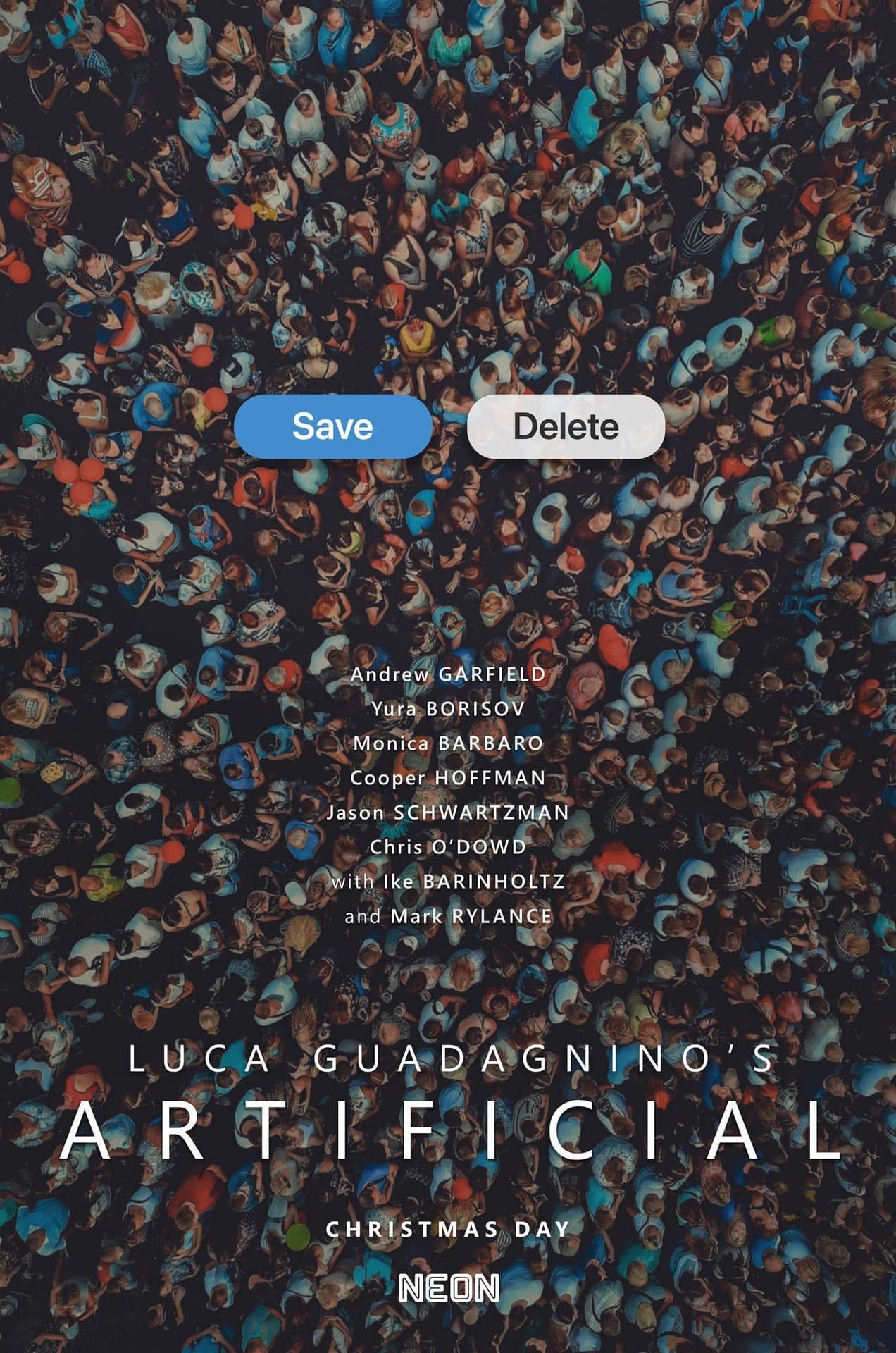
My favorite part of Luca Guadagnino’s Artificial was the introduction, during which I was the only person to clap in the 1,000-person Alice Tully Hall when After the Hunt was mentioned. All kidding aside, it’s nearly impossible to discuss Artificial without talking about Alejandro González Iñárritu’s Digger, which serves as a scathing rebuke to this film.
What’s good? The score by Gorillaz frontman Damon Albarn. It sounds and feels like a great new Gorillaz album, echoing the work Trent Reznor and Atticus Ross did on their iconic The Social Networkscore while injecting it with a modern tinge of horror and synth. The Social Network comparison does not just end with the score, though—Artificial feels like this generation’s version. It’s a melodramatic takedown of the people behind the latest tech innovation, though the fact that it veers just a bit too close to its spiritual predecessor robs it of any true bite or powerful critique.
Wait—this is supposed to start positive. Luca Guadagnino directs the hell out of this thing. Excellent staging makes Artificial feel like a modern-day period piece and simultaneously a Shakespearean tragedy. San Francisco has never felt quite so cold, as if the city itself bends to the whims of these tech giants.
And the performances are stellar. Andrew Garfield (Eduardo Saverin in The Social Network, Sam Altman here) perfectly encapsulates the sinister nature of our antagonist. He captures the mannerisms perfectly on the surface while plumbing the depths of his true depravity. The real standout is Yura Borisov (in an unrecognizable turn from his genre-defining performance in Anora) as our protagonist, Ilya Sutskever—the brains behind this leap in artificial intelligence that we cannot escape. He’s an unmitigated genius, but painfully stupid about all the things that really matter. Ilya is the core of the film, wrestling with making something that has the potential to be great but an even bigger potential to be horrific.
And it’s this attempted balance between the humor on the screen and the underlying tragedy of where this has gone (and will likely go) that neuters the film’s message completely. It is fun to laugh at Ike Barinholtz’s spot-on Elon Musk impression, but most of our cast (even the unrecognizable ones) veer too quickly into caricature—feeling closer to an SNL skit than a prestige drama. These are talented actors, but the script keeps asking them to deliver punchlines when it needs them to feel like people.
For a film that turns very dark very quickly, the danger it warns of is hampered by the script’s reliance on caricature—and its legacy as a less competent copy of The Social Network is fully cemented.
Artificial is anti-AI through and through (Amazon MGM Studios dropped it from its release slate before Neon picked it up), but it does not give its message enough teeth. Fincher mines the emotional core of Mark Zuckerberg, deftly tying the lonely, broken nerd to the inevitable creation of our modern social media hellscape—but that film benefits greatly from Facebook being established and known. The race for AI is still on, and Artificial may prove to be more prescient as time goes on, but instead it already feels outdated and irrelevant.
The script is ultimately to blame here (reunite Justin Kuritzkes and Luca Guadagnino—please!). No combination of great performances, stellar scores, or talented cinematography can outrun a bad script. The humor does work—but only at the expense of its broader message. How can we sit here and laugh at these immensely powerful and amoral people when AI appears to spell the end of humanity? Guadagnino does his best to reinforce this point, particularly with some sparsely used but haunting shots of our sets without anyone in them.
In some respects, I’d argue the script is too faithful to real-world (and well-reported) events, though I’d challenge it even more by arguing that the balance between cinematic liberty and the stories we’ve all heard could have worked with a more consistent tone and a better grasp of what to include and what to leave out. Instead, the film feels like (and generally is) a faithful retelling of the rise of OpenAI and the dramatic ousting (then reinstatement) of its CEO, Sam Altman, but the emotional beats are robbed of their impact by a script frequently opting to tell instead of show—nowhere more egregiously than in the credits sequence that literally spells out where we are now rather than trusting the audience to understand that from the film we are watching.
Andrew Garfield, as Sam Altman, says, “So… THAT just happened”—an archaic line read that symbolizes how outdated and out of touch Artificial feels compared to the masterful The Social Network. If you are looking to better understand the world we are currently living in, I’d implore you to spend your money and time on Digger instead (which does more with its antagonist in less than 15 minutes of screen time than Artificial does with its two-hour runtime). Heck, I’d even recommend After the Hunt for a more scathing and adept critique.