

The Debut 5/5
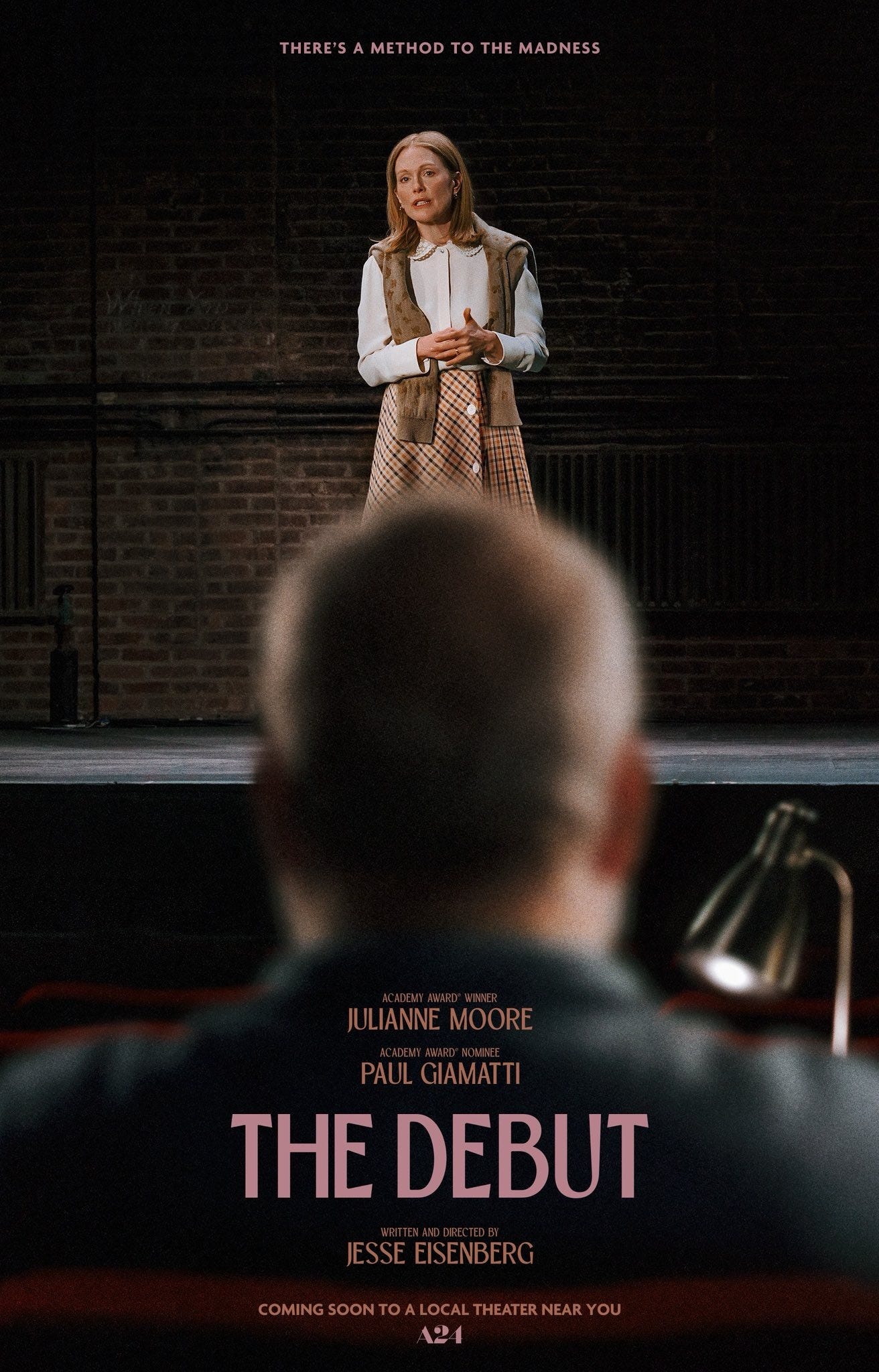
Jesse Eisenberg is on a roll. Across When You Finish Saving the World (criminally underseen) and A Real Pain (arguably overrated but well-liked), I am so pleased that The Debut is his best film yet, and easily one of the best of the year.
Julianne Moore is Mona Friedman, a shy, unfulfilled housewife close to the edge of her breaking point, who auditions for Nosy Neighbors, a New Jersey community theater production helmed by Jerry (Paul Giamatti). As Mona breaks out of her shell through the validation and persistent attention Jerry gives her as the director of Nosy Neighbors, Eisenberg takes us on a truly transformative trip that is deeply moving and absolutely hysterical.
Nearly everything in The Debut works. The cast is incredible. Julianne Moore and Paul Giamatti seem to be shoo-ins for Oscar nominations and would be my front-runners to win—though I’d argue I was equally impressed by Halle Bailey’s supporting role as Stef, who, with limited screen time, nails the emotional core of the film in its final moments.
The script is nearly perfect—making this the funniest film of the year. The entire cast is given so much to work with that I am already itching to see what kind of outtakes might exist. These perfect performances, combined with such a strong script, resulted in my NYFF audience literally applauding Julianne Moore’s performance halfway through the film—something I have yet to see replicated at this year’s film festival.
Even Nosy Neighbors, the fake musical at the center of the film, is better than it has any right to be, simultaneously ridiculous enough to work as parody and sincere enough that you understand why these characters care so deeply about putting it on. In the third act, when the first performance is finally on display, I was tickled by how much of Nosy Neighbors had been held back for a wonderfully comedic payoff that kept me on the edge of my seat. As much as I am here to celebrate film, I am pleasantly surprised that so many of my favorites this year have been anchored by theater (whether literally or figuratively)—I’m thinking Digger, The Invite, and The Musical in particular.
There I go mentioning Digger again—but how can I not? The Debut is a fascinating companion piece because it picks up on one of its many threads, expands on it, and takes it to a hilarious conclusion. Both films are fascinated by performance itself: why people act, what they are looking for when they do it, and whether art can actually reveal something truthful about the person performing it. Without spoiling anything, The Debut is a celebration of art, but even more so a celebration of acting. What does it mean to be an actor? Why do we do it? What does it take to be good at it?
This earnestness is felt throughout the entire film, nowhere more than in the contrast between Moore and Giamatti’s performances (in maybe their greatest performances ever, though I find myself saying that after every new film I see them in). Mona is discovering what performance can unlock in her, while Jerry already understands the intoxicating power of being the person who gets to unlock it. This is a film that will make you deeply appreciate acting (all while pointing out how silly this whole thing is), without ever undermining the magic of it all.
This delicate balance does nearly go off the rails. The third act sees Mona’s character take a dark turn that feels slightly incongruous with the rest of the film—though I can’t help but forgive it for missing that one swing because everything else is so superb. And even if the script loses itself just a little bit, our characters never do—with Moore and Giamatti going above and beyond to sell this heightened version of reality.
The Debut is a great film, not only because it is astoundingly funny and deeply entertaining, but because it is such a celebration of the art form itself. It has renewed my appreciation for all the actors willing to throw themselves onstage so that we, as the audience, can also experience that private moment when a performance manages to move us in the same way the actor was moved the first time they read the script.
Tender Loving Care 4/5
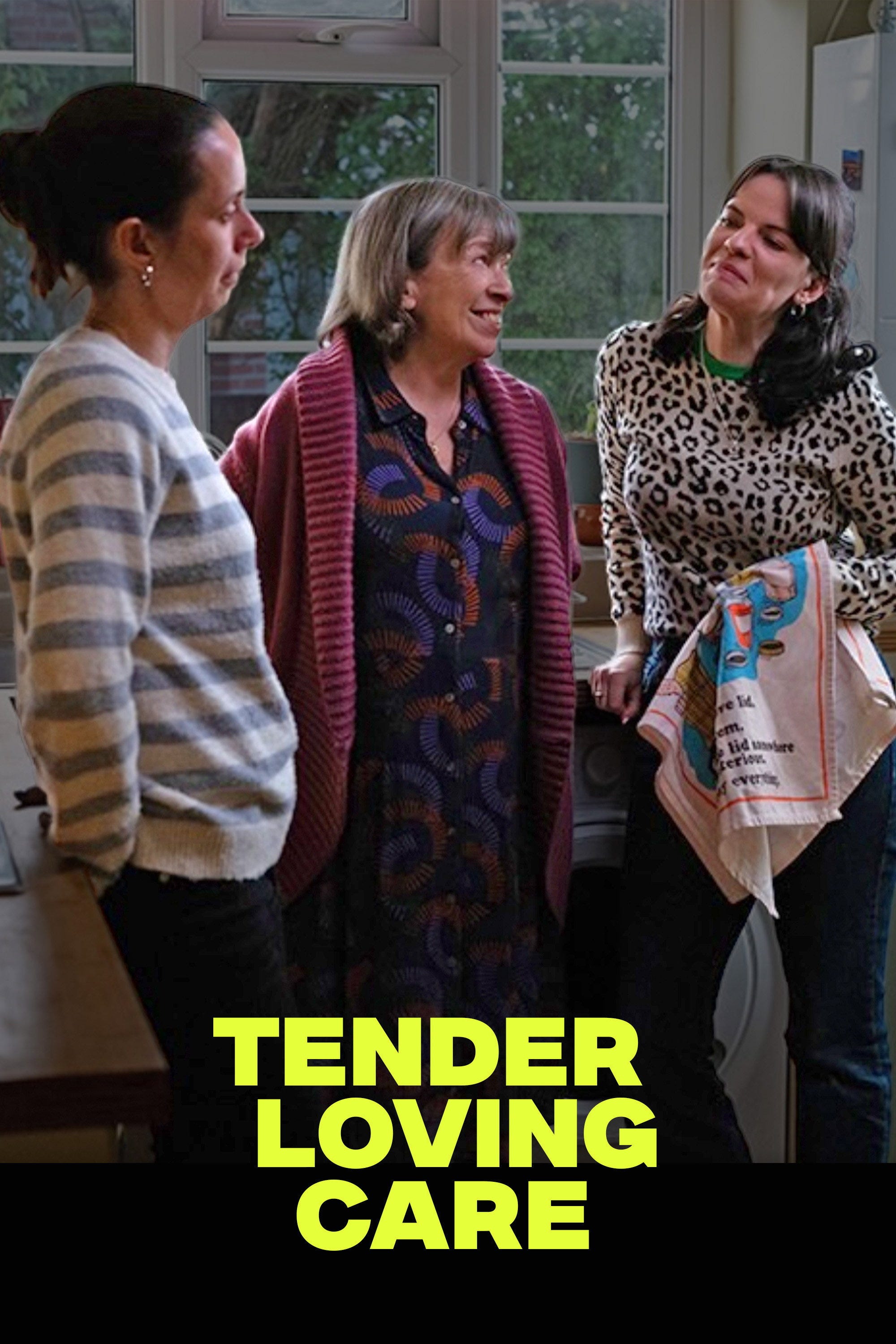
Mike Leigh’s Tender Loving Care is a delight—filled with humor and humanity while maintaining a laser focus on a larger and powerful message. It does not quite reach the heights of Hard Truths (I’ll never forgive the Oscars for robbing Marianne Jean-Baptiste of an Oscar nomination, let alone a deserved win), but Leigh’s likely final film serves as a timely denouement to a storied career of small films punching far above their weight.
Tender Loving Care stars Kate O’Flynn (Amy) and Marion Bailey (Birdie) as lifelong friends who function more like sisters, reconnecting later in life while balancing their desire for companionship with the demands of their thankless social worker careers. This odd couple is flanked by a real couple, Amy’s parents, Geoff (Paul Jesson) and Rosie (Alice Bailey), who are perfectly lovely—though Amy still struggles with being honest with them.
Geoff and Rosie are getting older. It’s clear Geoff has had some health issues, while Rosie looks older but frequently moves like she is just one of the girls. The film follows Amy as she exits a toxic relationship, moves back in with the single Birdie, and falls right back into their sisterly dynamic. Leigh spends most of the film in quiet, personal moments with each character, highlighting the titular tender, loving care they provide to one another in life’s most challenging seasons. And the humor is spot-on—there’s one moment in the film that cuts away during a girls’ night out that had the entire theater in laughter.
It’s all a delight and feels like we are being invited into this world with our own family. We commiserate with Birdie and Amy after a hard day’s work, as they struggle with wondering if they are doing any good at all. We also watch Geoff and Birdie share new experiences together—the exact kind of seemingly insignificant moments that will inevitably become nostalgic stories retold to friends and loved ones years later.
Life can be boring, but Leigh never sees it this way. Or maybe, more accurately, he does not see ordinary life as unworthy of our attention. We have good days and bad, and his choice to highlight those moments that feel like nothing at the time but become core memories in the future is adept and shows just how masterful he is at choosing what to show and when to show it.
Beneath this family drama, though, lies a highly critical message about what happens when care—personal, social, or institutional—is no longer available to the people who need it, subtly set up throughout the film and paying off in a moment that is sure to take your breath away. Leigh, in just over an hour and a half, successfully shows the challenge and necessity of tender, loving care—while also highlighting the tragedy of its absence. This is a meditative, reflective, melancholic movie that feels right at home with Leigh’s filmography but is especially meaningful as his likely final film. After a career spent making small films about ordinary people that somehow manage to contain entire worlds, Tender Loving Care feels like an appropriately modest—and quietly devastating—way to bow out.
Can’t believe how many 5/5s have come out of October so far!