

Resident Evil 4/5
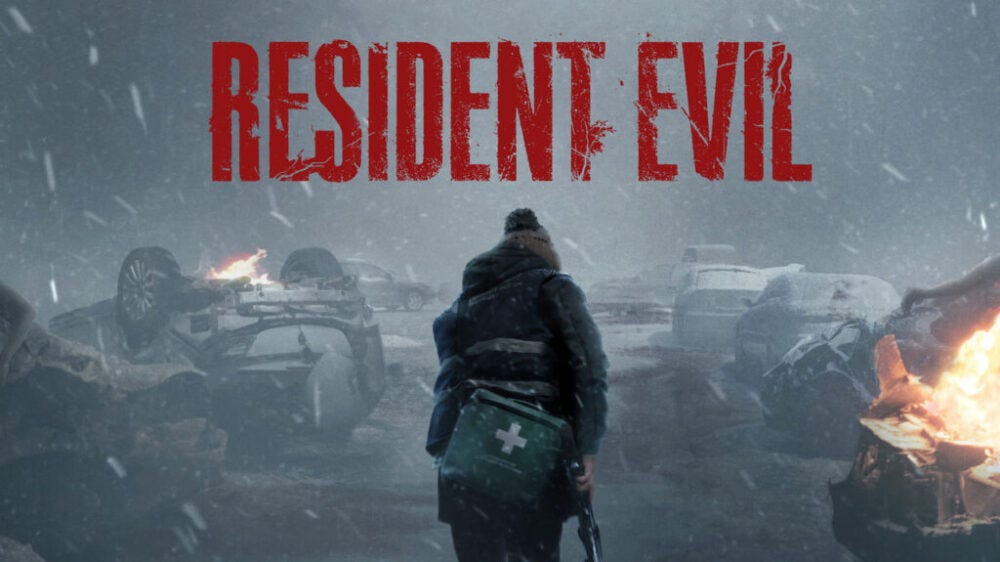
Zach Cregger’s Resident Evil is poised to overperform at the box office and deliver the biggest opening weekend yet for the long-reviled Resident Evil film franchise, itself based on the long-beloved video game series. That potential success isn’t particularly surprising to me: Cregger is coming off the horror phenomenon Weapons, Resident Evil is coming off a great mainline game with Requiem, and audiences generally seem eager to show up for horror right now.
All of that did mean I went in with slightly inflated expectations.
And, considering I read the script months before seeing the finished film, I am glad to report that Resident Evil slaps.
While it’s not quite as good as Weapons, this feels like a near-perfect adaptation. It tells its own story while perfectly capturing both the horror and the inherent silliness of the Resident Evil universe. Don’t let the source material scare you away, either. I found the film supremely satisfying both for people familiar with the games and those who know absolutely nothing about them. If anything, it leans slightly more toward general audiences—but I don’t think that’s a mistake. This is very likely the start of a new franchise and I am on board.
Austin Abrams stars as Bryan, a medical courier experiencing what can only be described as the worst day of his entire life. We meet him just as he learns his girlfriend is unexpectedly pregnant, shortly before he’s tasked with making an urgent delivery—for double pay—through the ice and snow to Raccoon City General Hospital.
This goes about as terribly as you would expect.
For a film that spends roughly 90% of its runtime with one character, often alone, Abrams is perfectly cast. He’s funny and likable, but also realistically incompetent. You can’t help but root for him, and his performance is a master class in horror acting considering how much of the film rests entirely on his shoulders. After his work in Weapons, I’m thrilled to see Cregger feature him so prominently here—and even more excited to see what he does in Whalefall this October.
Despite having read the script, I still found myself on the edge of my seat and jumping at nearly every scare. This is a great horror movie, and I found it far more satisfying than films like Obsession or even Backrooms. Resident Evil knows exactly how much it relies on jump scares, and this adaptation executes them extremely well.
What surprised me most was how funny I found the movie, especially knowing that Cregger reportedly cut much of the humor after an early test screening. It is still very funny. Not every joke lands—there are a few genuinely cringe-inducing moments I would rather not mention that feel completely incongruous with the rest of the script—but several cameos inject much-needed levity into the increasingly nightmarish world. That balance can occasionally feel uneven, and some of those appearances disappear almost as quickly as they arrive, but the movie moves fast enough that it rarely becomes a major problem.
The third act will probably be polarizing, though the more I’ve sat with it, the less unexpected—or unearned—it feels.
Resident Evil is an incredibly fun movie and absolutely worth seeing for horror fans. The scares are generally excellent, the set pieces are memorable as hell, and Abrams is a joy to root for. If you do see it, pay close attention to the kinds of monsters Bryan encounters and the ways they might reflect the internal reckoning he is having over his impending parenthood.
There is more going on here than a simple monster gauntlet and is well worth seeing on the big screen.
The Dog Stars 2.5/5
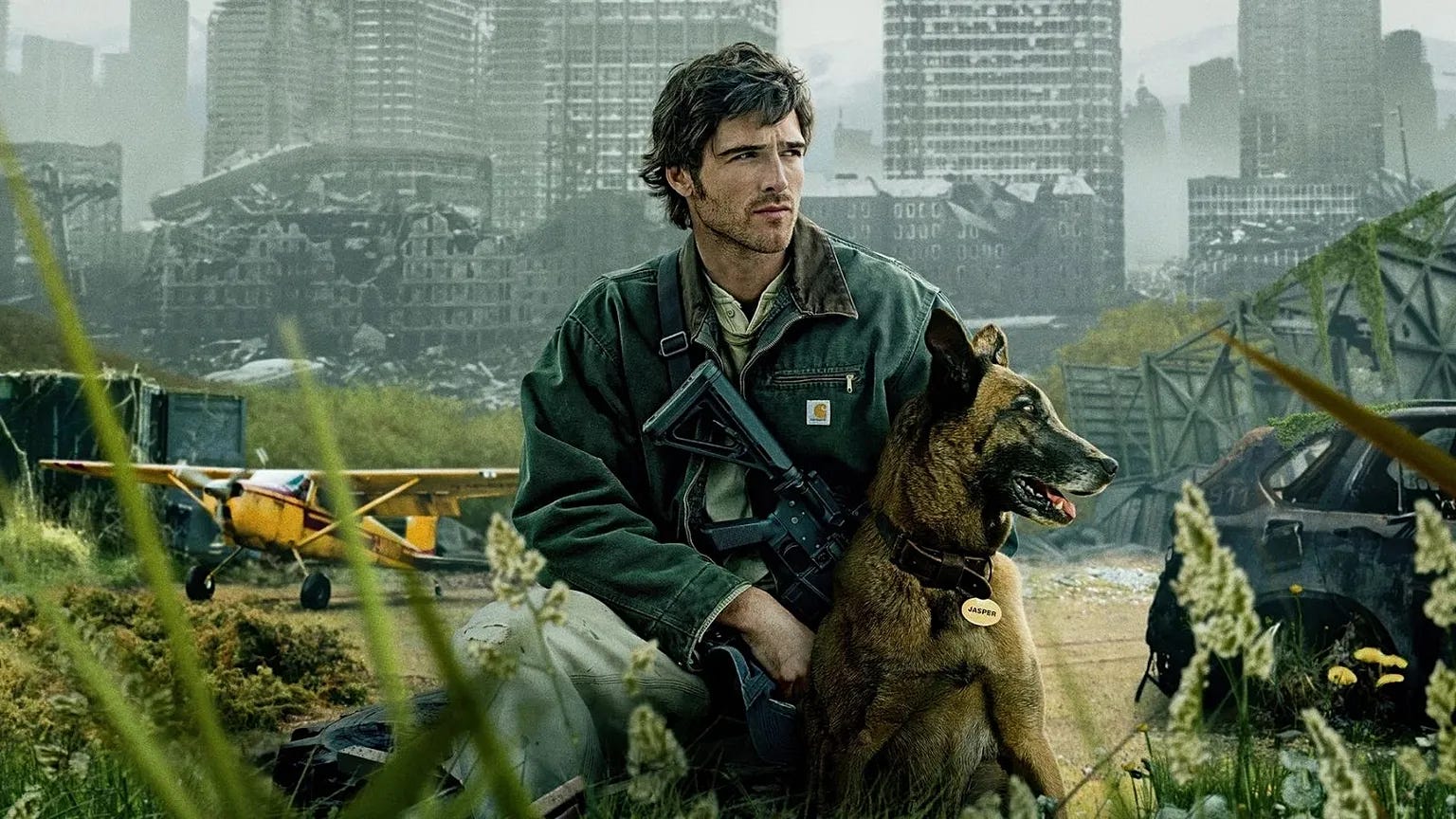
Ridley Scott is a director known to virtually everyone. From science-fiction masterpieces like Alien and Blade Runner to historical epics like Gladiator and Kingdom of Heaven, his name alone can still bring people to the theater.
He may have lost some of his luster—and Scott himself seemed about as unhappy with Gladiator II as many audiences were—but after more than 50 years in the industry, his latest film also feels like one of his most personal.
In a 2024 interview with The Hollywood Reporter about his career and the Gladiator sequel, I was moved when, at the end of the conversation, Scott was invited to add anything else. Instead of plugging another project, he simply said: “I miss my brother.”
That is what The Dog Stars is about.
In a post-apocalyptic world ravaged by a pandemic, we are introduced to Hig (Jacob Elordi) and Bangley (Josh Brolin), an unlikely pair making do in a world that has ended. We spend considerable time simply observing them and their tenuous relationship. Bangley seems to have found some degree of comfort in the apocalypse, like a doomsday prepper who happened to be alive at exactly the right time. Hig is simply going through the motions.
He has found some solace in his dog, Jasper, but remains haunted by everything he has lost.
Hig is a former mechanic with a penchant for flying, braving the gangs roaming Denver to gather supplies that he shares with Bangley and a small Mennonite community nearby. The film is filled with scenes of Hig flying somewhat aimlessly, seemingly oscillating between suicide and hope. A radio signal from Grand Junction suggests there might be life beyond his near-solitude in Erie, a possibility he finds almost as tempting as simply flying the plane straight into the Rocky Mountains.
When Jasper is abruptly killed during an unprovoked attack on their compound, Hig—barely hanging onto a reason to live—sets out without Bangley to investigate the mysterious radio transmission.
What follows is an uneasy encounter with Pops (Guy Pearce) and Cima (Margaret Qualley), who reluctantly take Hig in after he experiences trouble with his plane. Cima and Hig eventually begin a romantic relationship before they are forced to flee their tranquil mountain home when hostile survivors descend upon it.
They head toward Grand Junction, where the movie takes a sharp turn into the absurd—and finally injects some actual fun into this world—before eventually reuniting with Bangley. That reunion provides one of the film’s few genuine moments of levity, shortly before Bangley essentially single-handedly defeats an army of attackers in a sequence that reminds you just how talented Ridley Scott still is when the material allows him to flex those muscles.
Unfortunately, so much of The Dog Stars is frustratingly unfun.
Elordi and Qualley have almost no chemistry, and Elordi in particular feels frustratingly one-note. The pacing is a slog, the film is probably 30 minutes too long, and despite some gorgeous aerial photography, the whole thing feels unfocused and uneven.
And yet, I can’t say I’m entirely surprised by any of that.
I can understand why this material stuck with Scott, who is still grieving the loss of his filmmaking brother, Tony. Grief is all-consuming in virtually every form. You can’t escape it. You find things that make it slightly easier to carry while constantly questioning whether they are actually enough.
Seen through that lens, even Elordi’s one-note performance begins to feel more intentional. Hig is a man who has lost almost every source of happiness and no longer understands how to find it again. His journey feels almost as uneven as Scott’s filmmaking here.
He is talented. That much has never been in question.
But what is the use of talent in the face of that kind of loss? Death is inevitable, and moving forward can sometimes feel impossible.
Eventually, both Scott and Hig find some version of hope. Hig and Cima appear prepared to begin a new life in relative safety, finding solace and comfort in one another despite everything that has happened to them.
Scott never seems entirely convinced by that resolution, though. The ending feels less like something tangible in the present than a distant memory hovering just out of reach.
Maybe that isn’t enough. But what is the alternative?
Scott will keep making movies. It may never make his grief any more bearable, but perhaps it makes living alongside that grief slightly more tolerable.