

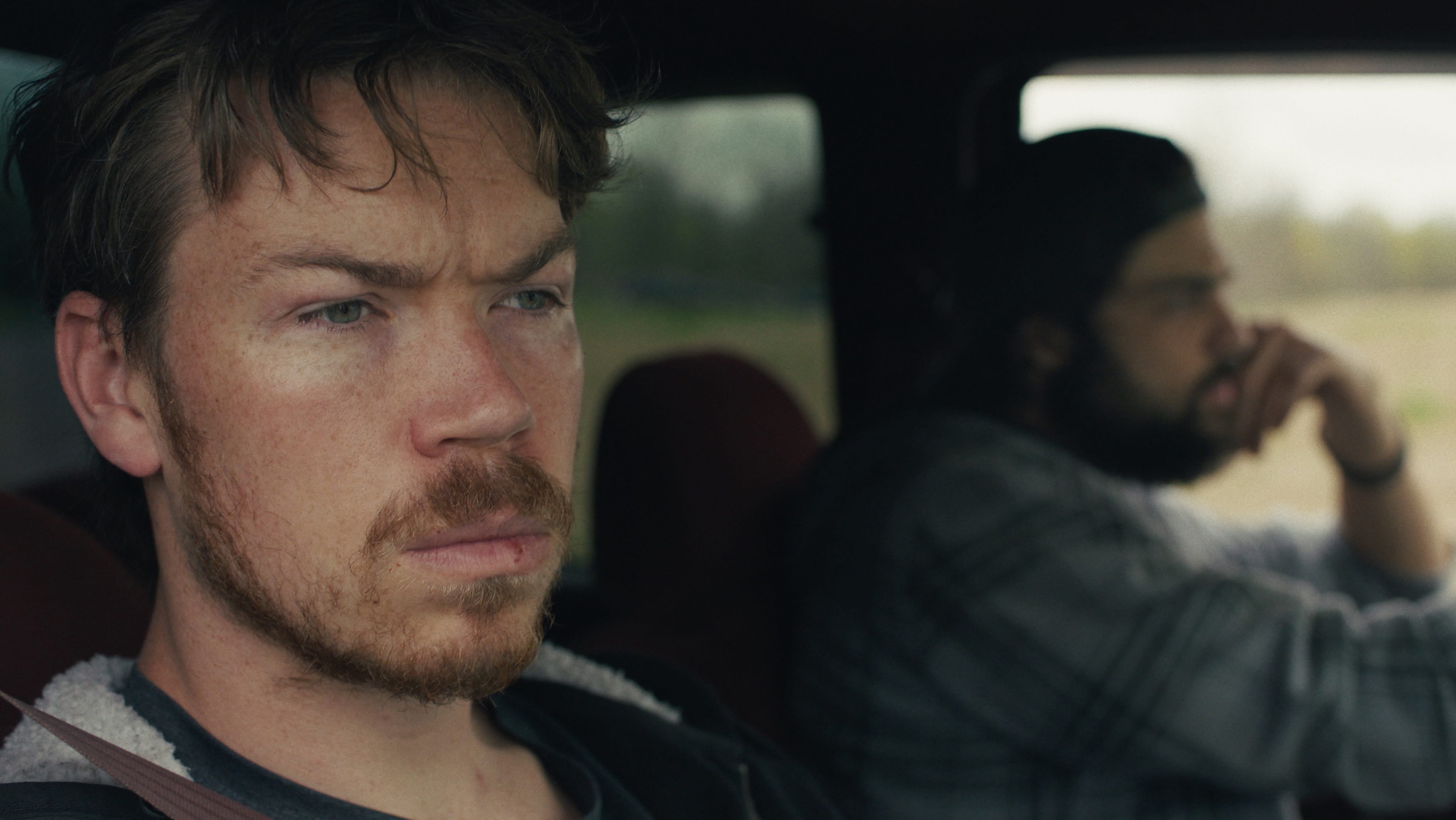
Union County is a film we’ve seen before, but it’s done so well that it’s hard to hold that against it. Will Poulter and Noah Centineo play foster brothers entering an Adult Recovery Treatment Program for addiction.
Stories like this can easily feel exploitative, but Adam Meeks, in his directorial debut, infuses the film with empathy that permeates every scene. Set in rural Ohio, the film incorporates real addicts enrolled in the program, alongside actual staff members playing their real-life roles.
Poulter delivers a quiet, devastating performance. Every pause and glance communicates pain, shame, and the overwhelming difficulty of confronting addiction. Centineo serves as his foil, arriving with an energy that puts everyone on edge, waiting for him to blow. As strong as Poulter is—and he truly is—it’s Centineo, working against his typical pretty-boy casting, who steals the film. The brothers’ emotional arcs diverge beautifully: Poulter internalizes, while Centineo combusts.
The film is steeped in tragedy, but it uses that weight to reinforce the fragile hope embedded in recovery programs. At a time when faith in institutions is at an all-time low, it’s powerful to witness real people, real struggles, and the communal effort required to make something that feels impossible marginally achievable.
This grounding in lived experience lends the film an uncommon gravity. We’re invited into group sessions where participants lay bare the damage addiction has wrought on themselves and others. Everyone feels like they’ve reached the end of the line—because they have. For Poulter and Centineo, all bridges are burned, no support exists beyond this court-mandated structure, and the stakes are absolute: this works, or it doesn’t.
Good people do bad things—some more than others—but everyone deserves a chance to make it right. Union County asks us to extend empathy to a population so often dismissed, and it does so by embracing complexity rather than moralizing. The performances are excellent across the board, but it’s the film’s commitment to community that resonates most deeply. In a world increasingly eager to dehumanize the “other,” Union County insists that empathy remains a vital skill—one we seem to be losing at our own peril.