

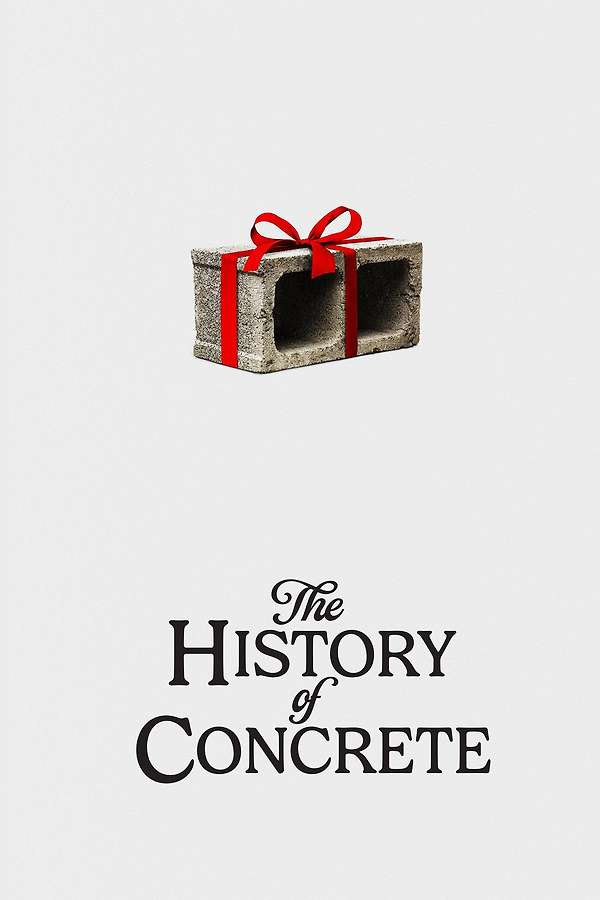
Fans of How To with John Wilson will find plenty of what they love in The History of Concrete. For those unfamiliar with Wilson’s documentary work, I’d happily invite you to experience one of our most empathetic and talented documentarians with his first feature film.
And for those who might normally be uninterested in documentaries, this is not a traditional one.
John Wilson is, first and foremost, a storyteller, and his authentic (aka weird) personality gives him access to people, places, and ideas we rarely encounter—or would even think to explore in the first place. His particular genius lies in finding seemingly disparate questions to ask and then somehow uncovering the core of our shared humanity within them.
The History of Concrete, like so much of Wilson’s previous work, is uproariously funny. I saw the film at a sold-out screening during a nor’easter at the IFC Center in NYC—especially prescient given some of the flooding issues we learn about in the film itself—and you could have mistaken the screening for an outright comedy based on how much the entire theater was laughing.
Wilson’s humor shines through nearly every minute of The History of Concrete (and How To, for that matter), but what’s most impressive is how consistently he finds that humor without ever punching down.
Despite the truly eccentric people he meets—and I’m thinking back to the Avatar obsessives and vacuum collectors of How To—Wilson always maintains his curiosity and rarely judges. When that judgment does appear, it is almost always directed toward those in positions of power, and never unfairly. That’s perhaps most obvious in a split-second Tim Robinson cameo that I will not spoil any further.
And yes, you will learn a little bit about concrete—or “cement,” pronounced at one point in a way I had genuinely never heard before—but that is merely the jumping-off point. What you need to understand about John Wilson is just how unpredictable the path becomes once he asks that initial question.
Although, as a NYC resident, some of what we learn about concrete has me particularly concerned.
In The History of Concrete, Wilson travels from the oldest concrete building in Rome to the oldest concrete street in Ohio, but the film is ultimately about what it means to make something.
Why do we do what we do?
Along the way, we meet a cast of characters who can answer that question only for themselves. Somewhere between the Gum Busters and the 3,100 milers, Wilson manages to transform observations about concrete into existential questions about the monotony of daily life, the compulsion to create, the grind of making art in a world that increasingly cares more about money than the art itself, and, ultimately, what gives any of our lives meaning.
That might sound unbearably heavy, but Wilson somehow molds all of it into something immensely profound and moving without sacrificing the strangeness or humor that makes his work so singular.
I laughed. I cried.
The History of Concrete is John Wilson’s Hallmark movie, in a way that only his particular genius could create.
The History of Concrete is playing in theaters now.