

The Invite
5/5
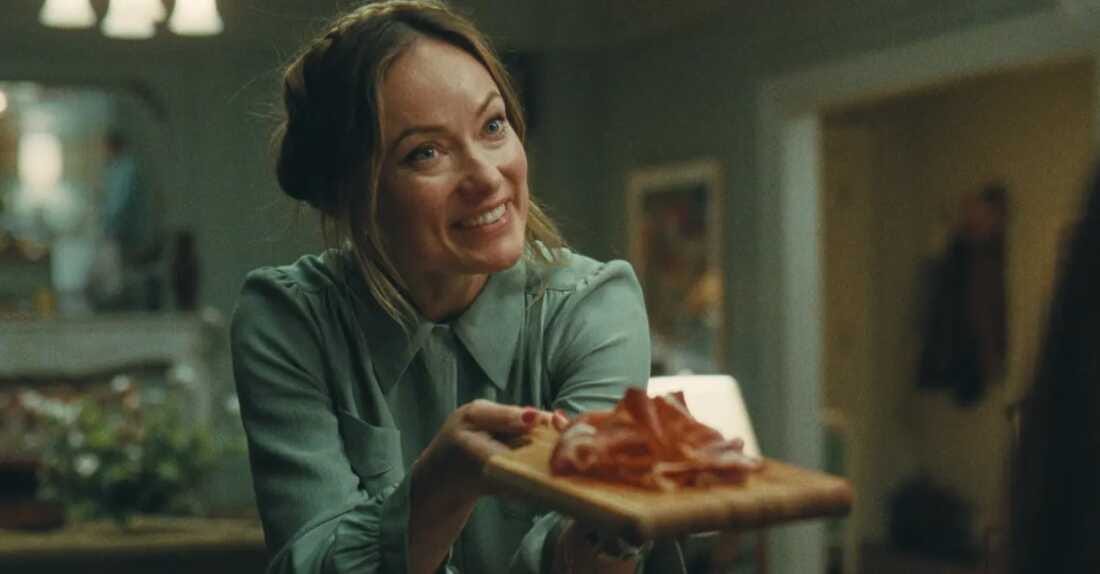
Olivia Wilde’s The Invite takes place on a single set, with four actors, in real time over the course of one evening. It is filmmaking boiled down to its simplest parts—and each of those parts is executed flawlessly.
Wilde, as star, director, and co-writer, is revelatory. Every choice feels like the correct one. From casting and set design to syntax and diction, you can tell Wilde took special care—and backed it up with enormous talent—in adapting this remake from its source film, itself based, unsurprisingly, on a stage play.
All four performances—Olivia Wilde and Seth Rogen as the hosts, Penélope Cruz and Ed Norton as the guests—are nearly perfect, but I have never seen Wilde act like this before. There is one scene involving a soufflé that contains the best bit of physical comedy I have seen from any actor in years.
Rogen is great as a down-on-his-luck, self-defeating middle-aged father—but it is not exactly a huge stretch either. Ed Norton and Penélope Cruz, as the cool couple next door who have loud sex, are… obviously the cool couple next door who have loud sex. Once again, not a huge stretch for anyone with eyes. That does not discount their performances in any way; they all have moments to shine.
Rogen shines when he moves away from being goofy and instead embodies the righteous indignation that only a man who feels like a failure can. Cruz plays an open-minded, sex-positive therapist who reads the room instantly but always appears to be waiting for the perfect moment to strike. Norton constructs a persona, then hilariously undresses it at the most inopportune moment (…Hawk). These moments give the characters complexity and depth, along with the chance to show their acting chops. That is hugely important given the scale of the film. Cruz, in particular, is outstanding. She is so precise with her language—even though English is not her first—and feels plucked straight out of an Almodóvar film.
But it is Olivia Wilde who completely blew me away. She plays a woman who cannot help but be honest while seemingly always lying. Her face gives her away seconds before her words do. She layers each lie by degrees, keeping much of what she says close enough to the truth without ever quite reaching it. Her performance is a true standout, but the fact that she also directed the film with equal precision is nearly unheard of.
So many films nowadays feel like TV (derogatory), with uninventive blocking and scripts that assume their audiences are only half paying attention. Wilde is a breath of fresh air. Every scene is blocked impeccably, with the characters inhabiting each room in subtle and telling ways—from the mirrored composition of Wilde speaking with Norton to Rogen sulking in the kitchen as the guests arrive. Each scene gives you so much to chew on.
I am still thinking about the clothes they wear, including the shades of blue that echo the paint colors Rogen and Wilde are testing for the bedroom: hers matches the shade she selects, while his matches the room’s existing hue, showing how he is being lost inside an inherited home he never truly chose.
All of these small details add up to a monumental triumph. Every single moment is meaningful and worth unpacking. There is nothing extraneous in this brisk film. Stripped to its essential and astounding parts, it builds to an explosively quiet ending that refuses to provide any clear-cut answers but eloquently shows how a single night can sometimes feel like a lifetime.
As much as I may recommend seeing a grand spectacle like Avatar: Fire and Ash or Mission: Impossible on the silver screen, this film earns its place on the big screen just as much as any of those blockbusters.
Backrooms
4/5
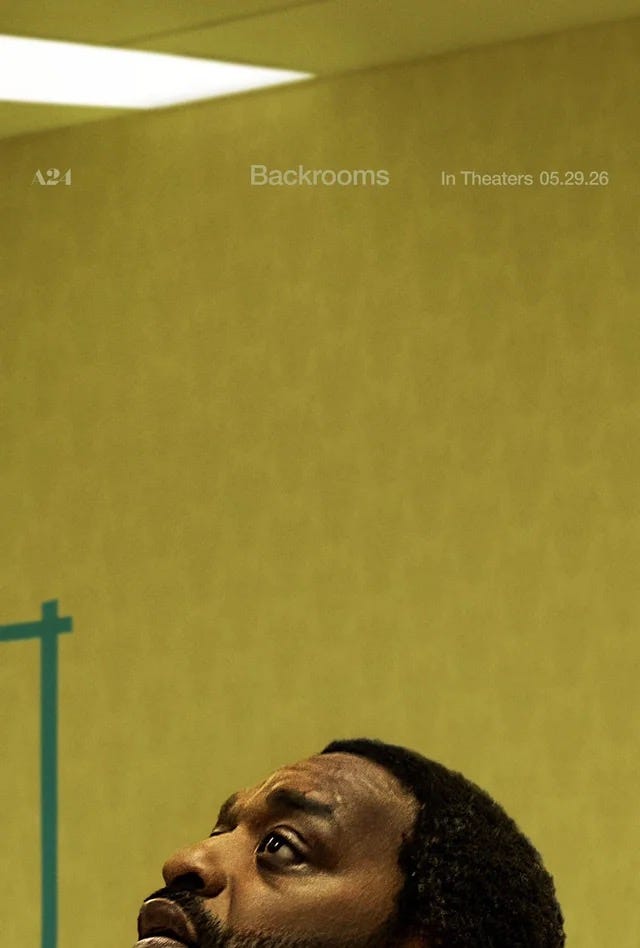
While Obsession is the current horror phenomenon—and boy, is it one, grossing over $400 million on a budget of less than $1 million—there is a second horror success story in Backrooms.
Also made on a paltry budget of under $10 million, Backrooms comes from Kane Parsons, a 20-year-old director who cut his teeth making inventive YouTube videos in his bedroom using tools like Blender. This nontraditional path led A24 to take a chance on a true Zoomer IP with Backrooms, and while Parsons is not the only YouTuber-turned-filmmaker, he is certainly the youngest and, after seeing this film, the most talented.
Backrooms, starring Chiwetel Ejiofor and Renate Reinsve, takes place in the ’90s. Ejiofor plays a failed architect managing a failing furniture showroom and inexplicably seeing a therapist, played by Reinsve, following the dissolution of his marriage. It is in this department store, Captain Clark’s, that an innocent investigation into a mysterious electricity bill leads to the discovery of a door—portal? entrance?—into the titular Backrooms.
The Backrooms appear endless, capturing a distinctly liminal atmosphere through unsettling set dressing and even more unsettling architecture. There are staircases to nowhere, doors that are too small, piles of clothes hiding something sinister, and, eventually, creatures that resemble humans grotesquely morphed into something else. The real star of the movie is, as it should be, the Backrooms—and what a star it is.
From the very first jump scare, I was on edge for the entire film. In the Backrooms, you never know what is lurking around each corner, what you might see next, or where the pathway forward—or backward—might be. It is a diabolical, horrific maze that begs to be studied but will never be fully understood.
In case you cannot tell, I am a big fan of this film, though that is in spite of its flaws—of which there are a few. Ultimately, a weak script holds it back from becoming the masterpiece lurking just behind its façade. Backrooms is incredibly compelling, but its stunning visual language is hampered by thin characters and a technically impressive third act that seems unsure of its own ending.
This lack of focus does not derail the film, but it does feel out of sync (hehe, iykyk) with the incredible quality of the images on screen. To Parsons’s credit, he did not write the film and seems aware that his skills lie more behind the camera than on the page. If he can find a better collaborator for the inevitable sequel, there is a real opportunity for Backrooms to become the defining horror spectacle of the decade.
I think the most complimentary thing I can say is that I had never engaged with the years of Backrooms lore Parsons developed on YouTube—or with the broader mythology spread across forums and subreddits—yet I left the theater ready to immerse myself completely in this world.
This film feels like the dawn of a new era of horror, finally moving beyond the “elevated” horror of the past decade—I am looking at you, Ari Aster—and into something new and fresh. Sign me the hell up!